
Atten-shun!
Where's your head at?

Hi everyone, hope all is good in your corner of the world.
A few weeks ago I spoke at an event about resilience. (If you’re interested in that, see below).
While I was talking about overwhelm, I pointed out that your energy and attention are the most precious resources you have - so it’s really, really important to be intentional about where you put them.
Afterwards, at least three people told me this was the line that struck with them. So I thought I’d expand on it here.
As always, I’d love to hear your thoughts.
Why is it so hard to focus?
Most work these days is “thinking” work in one way or another. We make decisions, big and small, throughout the day. Whether it’s deciding how to word that email, what the key points are to mention in the meeting, or which job on our to-do list needs to be checked off before 10am.
And that’s before we even start the actual work of making a business case, or designing a product, or interpreting data.
This is even more true as a leader. As you get more senior, you step further away from the day to day activity and your work involves more thinking, creating, analysing and deciding.
Your employer isn’t really paying you for your time. They are paying you for your attention and energy. That’s where your value lies.
However.
In the time I’ve been writing this email, I’ve got up to make a coffee. I’ve replied to two WhatsApp messages. I’ve checked my email. I’ve completed Wordle. And I got a notification of a message on LinkedIn so I went off to check that (only to find it was yet another sales pitch).
So now I’ve set a Pomodoro timer and put my phone on the other side of the room and I’m hoping that helps.
If we know that our attention and energy is our most precious resource, why is it so bloody hard to apply it?
These are big questions for much smarter people than me1, but here are some thoughts and suggestions that might help.

Accept your attention is finite
You cannot give everything the same amount of attention. Which means you have to give some things less attention.
Being able to prioritise is an essential leadership skill. And true prioritisation means saying no to some things, not just deciding in what order you’re going to do everything.
The best question to ask yourself is: where can I make the most impact? And that means you personally. I talk a lot about identifying and playing to your strengths, but that can be transformative here. Not great at something? Let someone else do it and focus on where you are adding the most value.
Work deeply, regularly
Cal Newport defines deep work as work that requires absorption2. Shallow work is work we can do while distracted – emails, signing something off, having a chat with a colleague. Deep work means we are focused on one task that requires our full attention.
When you concentrate deeply on something, your brain is able to make new connections and to think more deeply. It’s the only way to get to high-quality thinking and decision making. It also feels good, because getting into a flow is something we enjoy and reminds us that we’re good at what we do.
Newport argues that to be able to work deeply, you need to commit to no-distractions. That means turning off Teams notifications, putting your phone in a drawer and setting your status to Do Not Disturb.
He recommends blocking regular time out to do this. The more you do it, the better you get at it.
Have boundaries
For me, nothing focuses my work-mind more than knowing I have a hard finish at 4.30pm because otherwise there will be a sad child left waiting for me in a playground. But you don’t have to be a parent to give yourself the mindset that working time is limited and therefore focus is neccessary.
Not letting yourself “just do another hour” because there is so much to do might actually improve your productivity. It will certainly help you prioritise.
Getting more rest will definitely give you an energy boost. The trick is to stop and recharge before your attention-battery runs out, not when you’re down to the very last dregs.
Which brings me quite neatly to the end of my allotted 25 minutes and I’ve actually written the thing. I’ll need to do another session to tidy this up and get it out. But I might have a little break first….
Until next time
Ruth
FREE workbook: Resilience for Human Leaders
Bringing together many my emails, blogs and presentations from over the years, I’ve put together Resilience for Human Leaders: Ten self-coaching tools to help you feel calm, confident and in control.
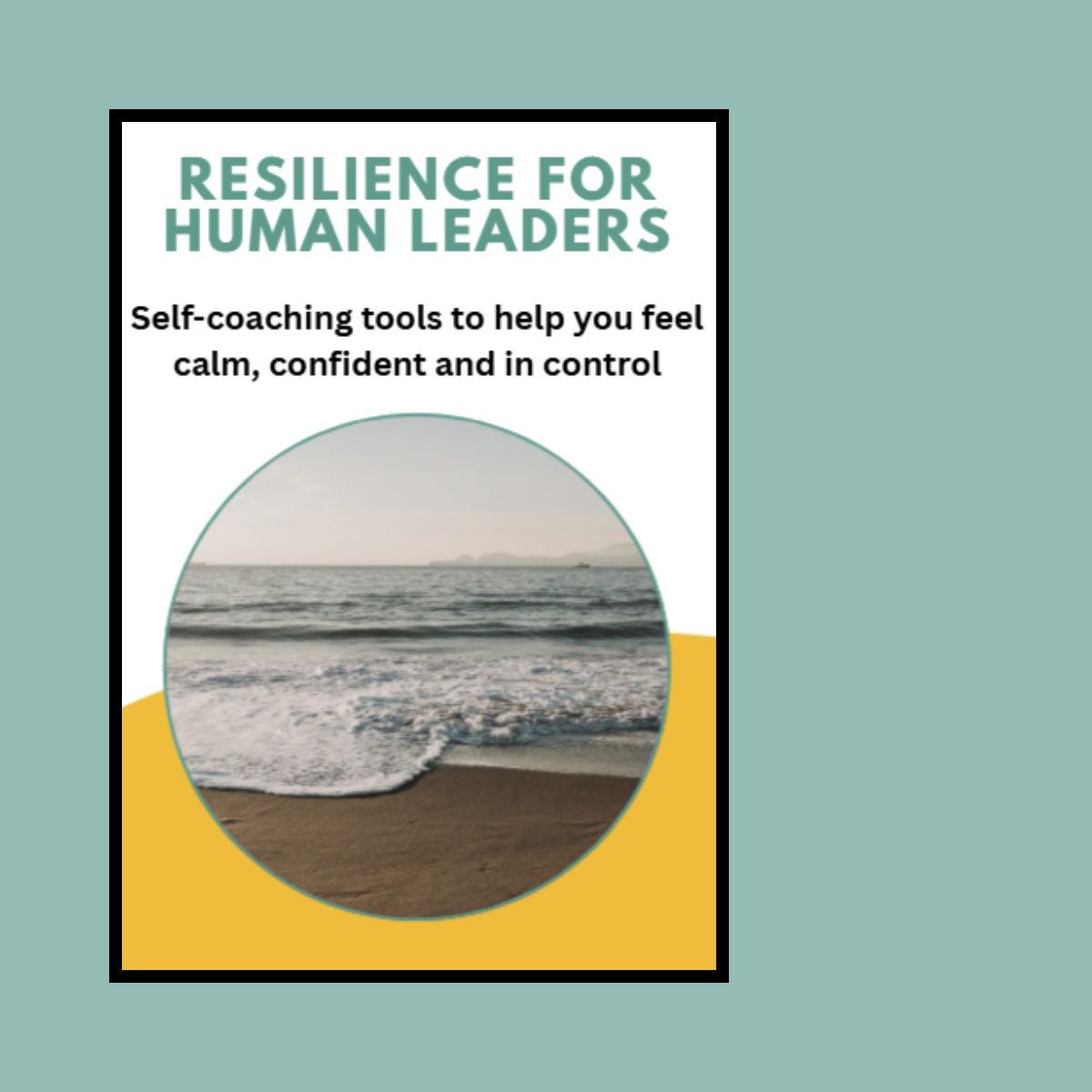
It covers what resilience is and how we can build our resilience. It provides self coaching tools to cope with uncertainty and overwhelm, and build more positivity into your day.
There is also a section on supporting someone you manage who might be struggling. Because that question comes up every time I talk about resilience and it’s not easy, I know.
And if you find it useful, please spread the word.
Although it probably has a lot to do with consuming short form content and the dopamine hit of notifications. If you aren’t familiar with the work of Jonathan Haidt, I highly recommend checking it out.
His book Deep Work is worth a read - or there’s a 15 min summary of the concept here